
Record the pattern before repairing
Garden office damp and condensation
If water appears on the glass or a mark returns after rain, record where it is and what happened beforehand. Show the pattern to your installer or surveyor before deciding on a repair.
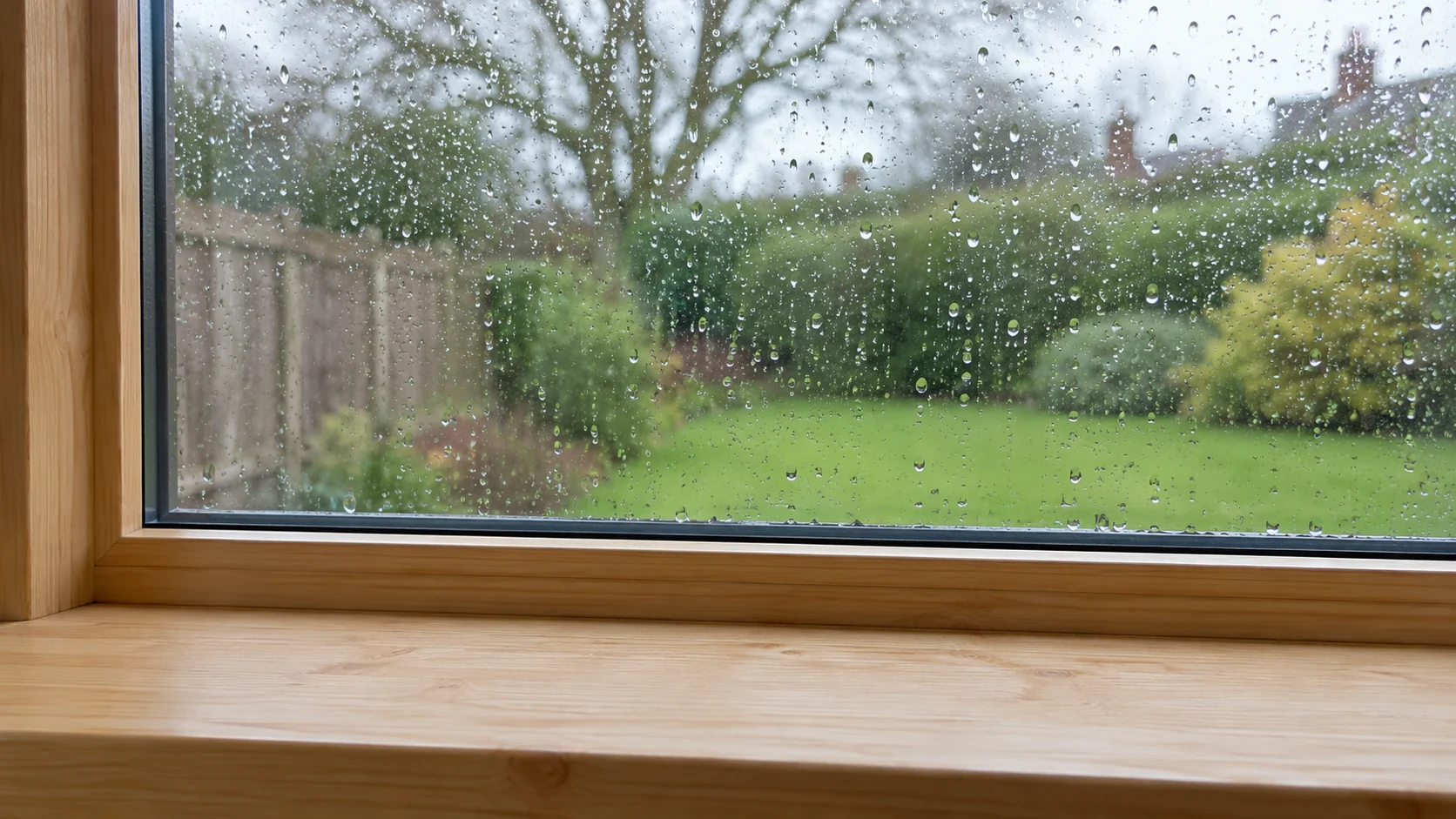
Where does the water appear?
- Wet after overnight cooling. Record which side of the glass, recent activity and heating.
- Fresh patch after rain. Capture accessible location and roof-edge context from ground level.
- Water near electrics or unstable damage. Keep clear and get appropriate competent help.
Collect photos for the assessment
From a safe position, photograph the mark close up and take a wider view that shows where it is. Note any change before the inspection.
Start with the surface and time. If the window is wet, record whether it is the inside, outside or apparently between panes. Record overnight cooling, heating, recent use, wet clothes and openings. If a mark grows after wind-driven rain, photograph nearby roof edges, walls and openings from safe ground and note the rain direction. Look at visible accessible services and the wall base after use or storms. A cold or poorly ventilated patch behind furniture can collect moisture, and a concealed leak can show up in a similar place. Mustiness alone does not establish the cause.
| Symptom | Safe observation to record | What the survey may need to distinguish | When to ask for help |
|---|---|---|---|
| Window wet after overnight cooling | Mark inside, outside or apparently between panes. Record heating, indoor activity and time | Surface condensation, an issue within the glazing unit or adjacent rain entry | Ask the installer if wetness keeps returning, appears trapped between panes or damages nearby material |
| Fresh patch after wind or rain | Photograph the location, nearby threshold, any accessible wall base and roof-edge context from safe ground | Roof or opening ingress, rainwater overflow, ground moisture or plumbing | Arrange assessment if it recurs, spreads or follows active rain entry |
| Musty smell or marks behind furniture | Record timing, furniture position and visible marks from a position you can reach safely | A cold, poorly aired patch, a concealed leak or another moisture source | Seek prompt help for persistent or spreading mould or unexplained moisture |
| Water near an electrical fitting or damaged building element | Keep the affected area clear and report where water is visible from a safe position | Unsafe electrical equipment, water path and building damage requiring competent checks | Get appropriate help promptly. Leave water-affected electrics out of use |
Keep roof and concealed inspection with the competent team. Use the diary to record a comparable observation each time, leaving instrument readings blank until measured. England’s housing damp guidance supports root-cause investigation in its stated housing context. England housing damp and mould guidance, Electrical Safety First water damage advice
Keep a useful temperature and humidity log
Include a room context shot and a detail of the accessible surface. Record the chair position if a mark or smell appears behind furniture.

Record each event and reading
Use the same named measuring position each time. The sample is a qualitative observation with blank instrument fields.
Mark affected spots on a simple floor plan and give each photo a date and location. Record temperature and relative humidity at a consistent named position, weather, heating, openings and occupancy. Relative humidity changes with temperature. A single mid-room reading cannot tell you what is happening at a colder surface or behind a lining. Ask the surveyor to explain the evidence, likely sources, where they could inspect, unresolved alternatives and proposed follow-up. Arrange any necessary remedial assessment alongside monitoring.
Coordinate ventilation use and repairs
Use ventilation, heating and drying arrangements as intended for the room. Note wet kit, exercise, drying or showering and keep accessible drainage and ventilation paths in service. Fix confirmed building or plumbing defects before covering or redecorating. If using a dehumidifier, use it as an appliance with its own operating instructions and monitor the moisture source. A converted shed needs a coordinated moisture and ventilation strategy before it is lined. Ask the installer to explain how proposed changes will allow the construction to dry and remain inspectable.
Related guides
Sources and checks
Show the installer or surveyor what you could safely see and how the readings changed over time. The housing guidance covers homes in England.
- England housing damp and mould guidance — England housing guidance supports prompt root-cause assessment in its housing context. Checked 21 November 2026.
- Electrical Safety First water damage advice — Advice on keeping away from potentially unsafe water-affected electrical equipment and seeking qualified assistance. Checked 21 November 2026.