
Garden room repair surveys
Investigate leaks and damp.
Record what you can see safely, then ask a surveyor to investigate the cause before you agree to a repair.
Record the symptom and its location.
Deal with immediate hazards first.
If water is near electrical fittings or the roof, floor or deck looks unstable, keep clear. Leave water-affected mains equipment out of use and leave wet sockets, switches and wiring untouched. Get a registered electrician for affected electrics or a competent building contractor for suspected instability. Wait for them to confirm safe access before going in or gathering evidence.
Electrical Safety First on safe re-entry and water-affected electrics.
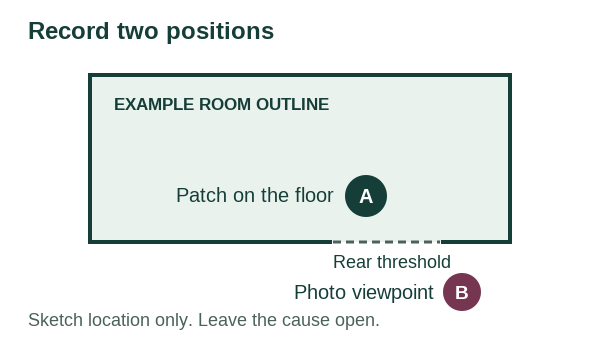
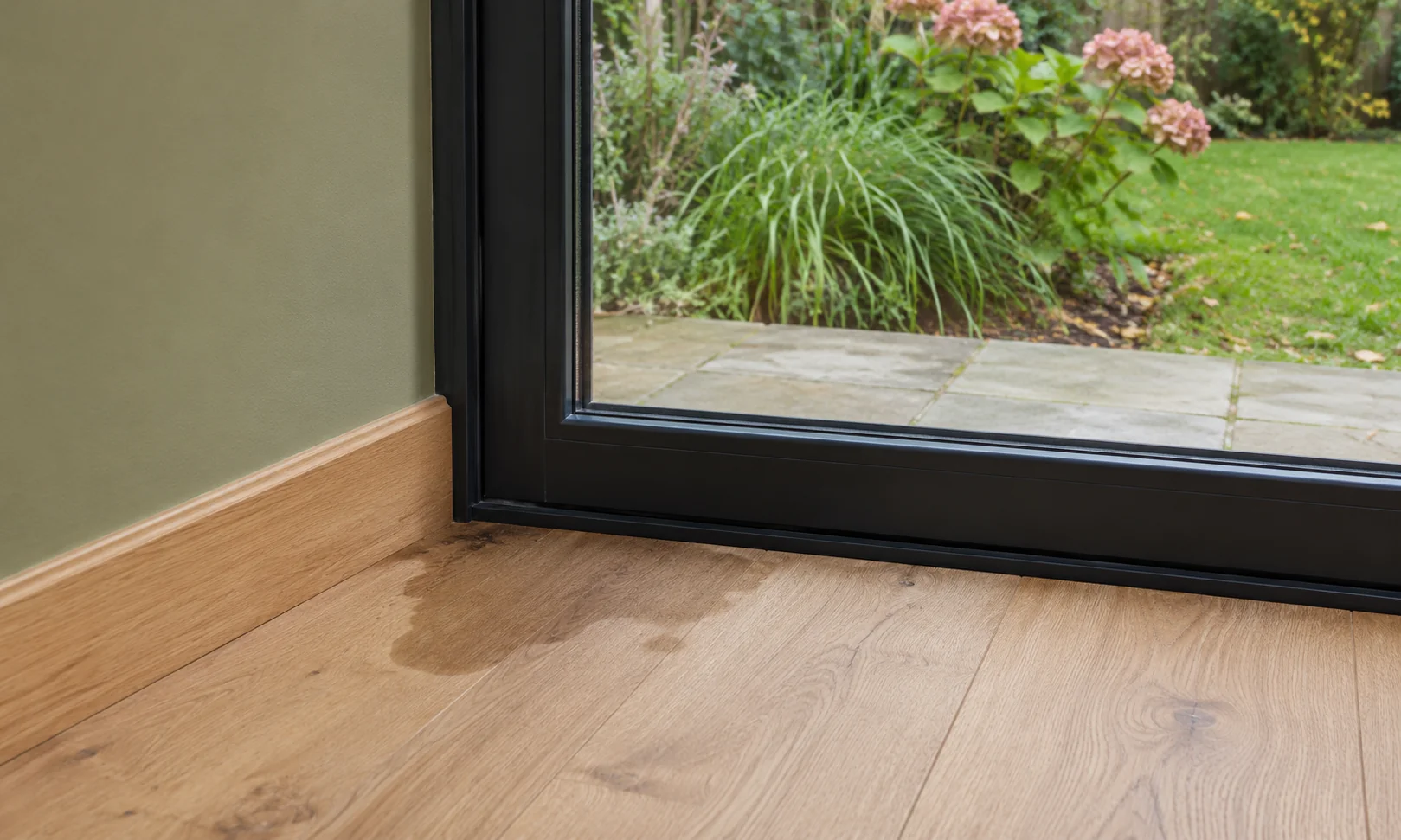
Mark the patch on a simple plan and take an overview and a close-up from a safe position. Note which side of the room it is on, when you first saw it, the weather beforehand and whether the room was heated or occupied. Repeat the picture from the same spot when conditions change.
For a wet floor, include the threshold, the nearest wall, visible ground or deck levels and any nearby downpipe. For a roof stain, note how long after rain it appears and whether it occurs in one wind direction. Damp can have more than one source. A survey may need to consider rain penetration, indoor moisture, drainage and plumbing together. Record a stain as a stain until somebody checks its cause.
Include recent work and changes in the floor or how the door operates. Keep roof observations at ground level and leave opening up to a competent contractor. HSE fragile-roof guidance (Great Britain) HSENI roof-work guidance (Northern Ireland) England housing guidance on different moisture sources.
When and where did the damp patch appear?
Use one entry per observation. Match the same marker on the sketch, photo and record.
Worked observation
After overnight rain, a dark patch near the rear threshold was visible at 08:00. An afternoon photo shows a smaller patch. The source is unconfirmed.
Write A on the location sketch. If you can see the patch safely from outside, record the viewpoint as B and use it for a later photo. If no view is safe, leave the observation blank.
| Field | Your record |
|---|---|
| Safe viewpoint or permission to enter | — |
| Record number and date | — |
| Location mark and photo viewpoint | — |
| Weather, heating and occupancy | — |
| Symptom and changes | — |
| Nearby openings, levels and drainage | — |
| Previous work or alterations | — |
| Supplier notification and reference | — |
| Follow-up and what changed | — |
What will the surveyor check?
A survey should explain the likely source, the evidence for it and what still needs checking.
Send the order reference, build-up drawings, installation date, warranty and maintenance records with the evidence. Ask for an inspection that explains the likely source, what supports it and which concealed parts remain unverified. A binding door can call for a hardware or frame check, but changes elsewhere in the room can make the base and floor part of the investigation. Describe whether it changes with weather and whether both leaves or nearby openings are affected.
Once any immediate danger has been dealt with, discuss notification and inspection with the supplier before commissioning work that would cover the evidence. If damage is still spreading, tell the appropriate contractor or insurer what has happened and ask how to document any temporary protection. Make roof observations from ground level and leave roof access to a competent contractor.
- Record which door sticks, when it started and whether the lock or clearances changed. Ask the contractor to identify the hardware and assess the frame, floor and base before adjusting anything.
- Ask which areas can be inspected, what remains concealed, what tests are proposed and whether opening up needs permission. Ask the surveyor to record alternative explanations and how confident they are in the diagnosis.
- Keep temporary protection separate from permanent work. Retrieve the actual notification and inspection conditions. Noah’s reporting process is one supplier example. Noah’s published reporting procedure.
What will each contractor investigate, repair and put back?
Compare prices once you know which quote covers finding the cause, carrying out the repair and making good afterwards.
Two fictional proposals at a glance
- Diagnosis. A inspects the visible joint. B traces the source and proposes tests.
- Repair. A allows for resealing. B prices the repair after the findings.
- Finish. A excludes making good. B prices it separately.
Ask what supports the assumed repair and what would change the scope. Leave cause, price and expected outcome open until the investigation supports them.
Compare the investigation, the proposed repair and making good as three priced stages. A proposal to seal a visible joint should state what evidence identifies that joint as the fault. Ask what happens if opening up shows decay or a different water route, who authorises extra work and how the price changes.
Two findings during one strip-out
K&S Bespoke Builds reports that stripping back the front and openings led it to replace the room. The contractor separately reports that lifting the decking exposed severe rot in the deck subframe, which it rebuilt. Agree how your contractor will document concealed conditions, who authorises extra work and what checks they will record before closing up. Ask who will respond if the symptom returns.
Make the proposals comparable
Send the same record to each contractor. Ask them to state what is included, what remains provisional and what they need to confirm.
Download the repair comparison sheet
| Scope item | Proposal A | Proposal B | Confirmation needed |
|---|---|---|---|
| Investigation and evidence | — | — | — |
| Access and temporary protection | — | — | — |
| Repair and intended result | — | — | — |
| Concealed condition allowance | — | — | — |
| Making good and waste | — | — | — |
| Checks/photos before closure | — | — | — |
| VAT and approval of variations | — | — | — |
| Responsibility if symptom recurs | — | — | — |
Send the defect log and ask each contractor to return the same repair-scope fields. Use the general quote comparison guide once the proposed work is clear.
Related guides
Roof systems and rainwaterGarden room roofs, drainage and roof-void ventilationFollow the rainwater after a stormGarden room surface drainage and base protectionKeep the written termsGarden room warranties, guarantees and aftercareConstruction and installationGarden room construction: connect the building to the plot.
Sources and checks
We compared official guidance and supplier documentation with the questions a reader can take to a competent investigator. The England housing guidance helps distinguish moisture sources. HSE advice covers work on fragile surfaces in Great Britain. The K&S example is the contractor’s own account. There has been no site diagnosis, verified repair result or matched price.
- Noah framework guarantee and reporting procedure — A named supplier’s notification and inspection process. Checked 20 November 2026.
- K&S supplier-reported garden-room replacement case — Separate findings on opening up the room and lifting the decking, as reported by the contractor. Checked 21 November 2026.
- HSE fragile roof surfaces — Competent assessment and precautions for work on or near fragile roofs in Great Britain. Checked 21 November 2026.
- Official damp and mould guidance — Multiple potential sources of damp in the context of England housing guidance. Checked 21 November 2026.
- Electrical Safety First: electrical safety after a flood — Safe re-entry and treatment of water-affected electrics before evidence gathering. Checked 21 November 2026.
- HSENI: safe maintenance, working at height and roof work — Northern Ireland regulator guidance on roof work and fragile surfaces. Checked 21 November 2026.