A tested position is a limited result
Record the observer, target and conditions. An unknown elevated or evening view stays an open question.
Use the sightline record
Sightlines and daylight
Before buying blinds or choosing glazing, check who can see your screen or desk, where they’re standing and what changes when the lights come on.
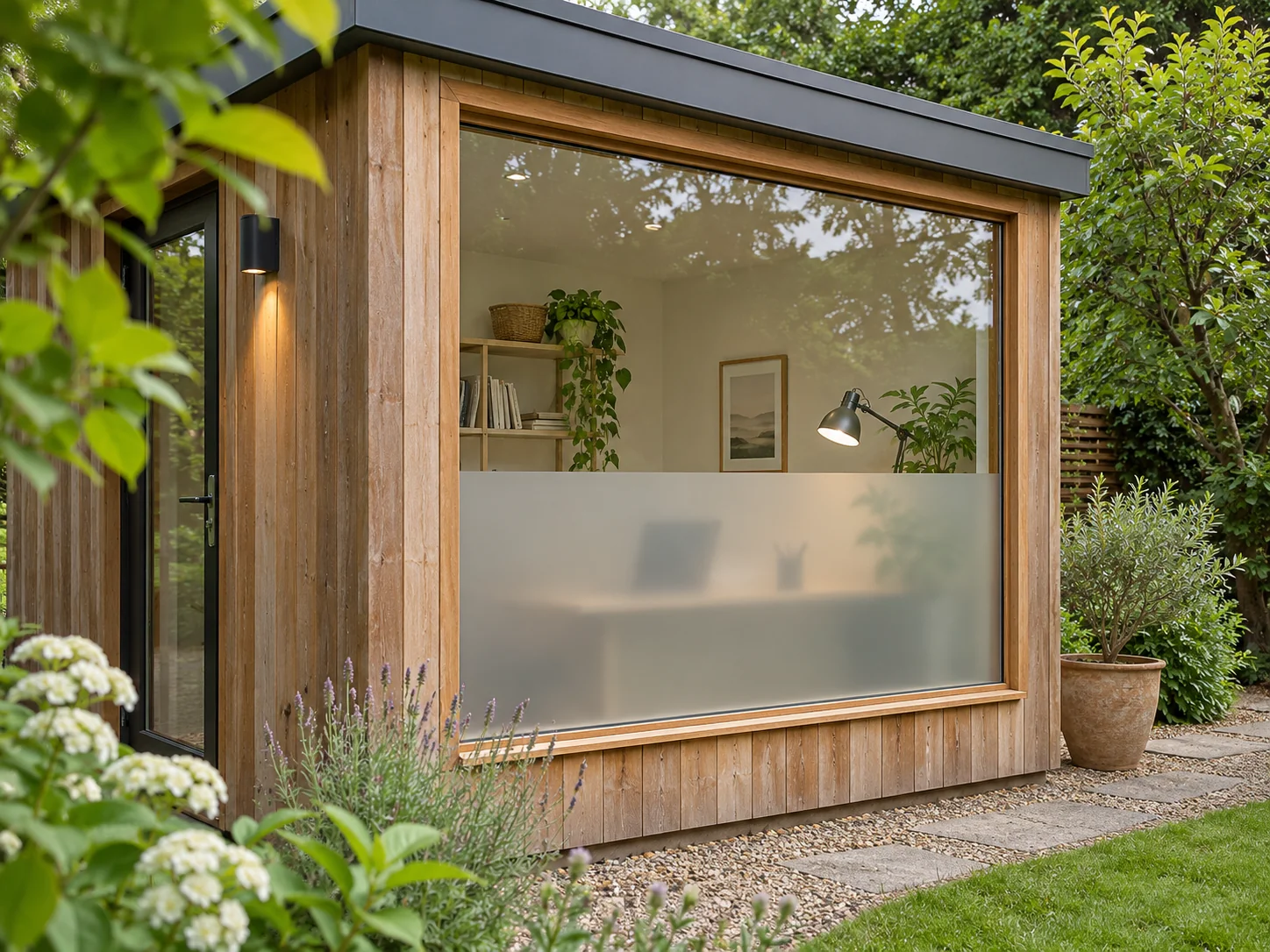
At a glance
Record the observer, target and conditions. An unknown elevated or evening view stays an open question.
Use the sightline recordCompare the exact fabric or glass, coverage, gaps, operation and compatibility, as well as its label.
Compare the optionsCheck the screen, camera background and shared workspace without treating visual screening as sound isolation.
Check shared work and callsStart with a specific requirement: what should not be visible, from where, while you are doing what? Hiding readable screen information is a different task from reducing the view of a seated person. A garden-office privacy choice becomes easier to compare once the observer and target are named.
Mark the garden approach, the open entrance and any relevant neighbouring viewpoint on a sketch. Record whether each position can actually be checked. Use legitimate accessible positions or permission for an agreed check, and use blank or dummy documents and screens. You do not need photographs of neighbours or their private rooms.
The diagram shows one person using a desk for work and calls. Its orientation is relative to the garden window and entrance; it has no surveyed compass bearing or dimensions. The real orientation, use and observation heights belong in your record.
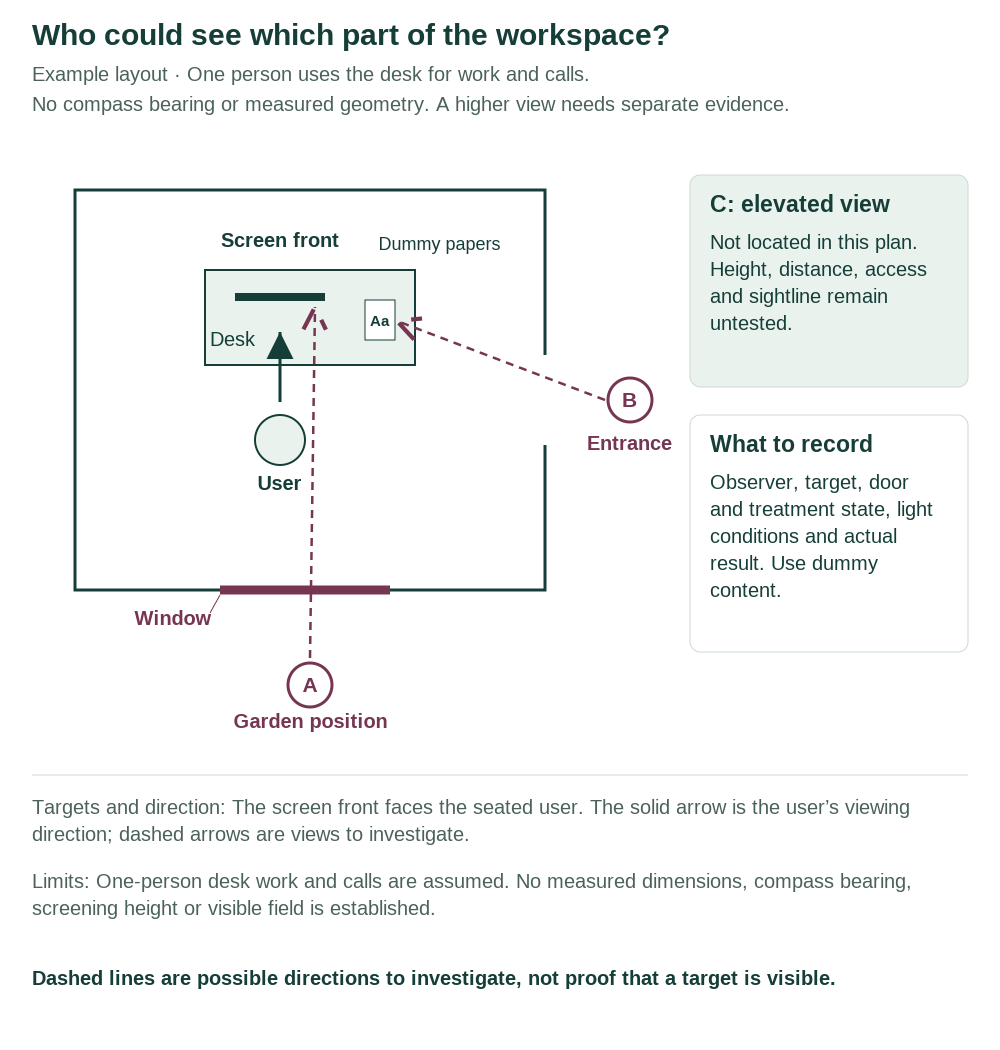
Check the named target from the actual approach, with the door and treatment in the intended state. Include standing and seated use where relevant. Write what could be distinguished from that position: readable detail, a silhouette or nothing seen in that particular test.
A plan cannot establish the view from an upstairs window. Record its height, distance and access only where known. If you can’t check the view, mark it “not tested”. Seek evidence you have permission to obtain, such as an agreed check from the upstairs window. Do not turn a line on the plan into a recommended screen height or a privacy guarantee.
Use one row-set for each observer, target and treatment state. Repeat it when the light balance or working arrangement changes. Write down which view the covering blocks and which views you still need to check.
| Record field | Your evidence and next check |
|---|---|
| Observer and access | Label the position; ground level or elevated; authorised access available or not tested. Record height and distance only if known. Record: ____ |
| Opening, target and use | Window or door, actual orientation, desk use, seated or standing user, and the person, screen, paper or storage to check. Record: ____ |
| Time and light conditions | Date, time, season, outside brightness and the internal lights in use; identify any unobserved condition. Record: ____ |
| Treatment and door state | Exact model, fabric or glazing, coverage and open, closed or tilted setting; record the entrance state too. Record: ____ |
| Observed visibility | Readable detail, silhouette only, not seen from this tested position, or not tested. Use dummy screen and paper content. Record: ____ |
| Retained usability | Daylight, outward view, glare, door and handle operation, ventilation access and actual call-preview result. Keep speech privacy separate. Record: ____ |
| Change, owner and retest | Chosen change, unresolved product or glazing compatibility, responsible person and the next test condition and date. Record: ____ |
The following record is entirely fictional. It demonstrates how to keep a useful observation without extending it to untested positions or conditions.
| Option or condition | What to compare or retain |
|---|---|
| A, one daylight condition | Fictional record: dummy screen characters were not seen from this tested garden position. Observer height, treatment state and light conditions are recorded for that observation only. |
| B and C, other views | The open-entrance view and elevated viewpoint have not been tested. The daylight result at A does not answer either question. |
| Evening condition | Internal lights on with darker conditions outside has not been tested. Repeat A in that condition and retain the other unknowns until suitable evidence is obtained. |
The next step is to complete the missing entrance and evening checks and resolve the elevated view where suitable evidence is available. Until then, the proposal still has open questions. If you are considering altered glazing, openings or external screening, use the permissions guide and the actual site requirements; this visibility record does not decide planning or boundary rights.
Try each window treatment with the same person looking from the same spot. Keep the desk as you’d normally use it, look at the same screen or papers and use the same lighting. The best answer may involve changing the desk position and the treatment together, rather than covering every window in the same way.
| Option or condition | What to compare or retain |
|---|---|
| Blinds | Compare the selected fabric and fitted coverage, not only the range name. Check adjustment, edge gaps, outward view and the same target after dark; retain handle and opening access. |
| Curtains | Compare fabric and lining with the coverage at the sides, centre and top. Allow for the stack when open, projection into the room, track support, cleaning and the view with internal lights on. |
| Reflective film | An outward view may be retained, but the privacy effect depends on the light balance. Repeat the evening check and obtain selected-film and selected-glazing compatibility before specifying it. |
| Obscuring treatments | Frosted film and replacement patterned or etched glass are different products. Compare the obscured view, selected specification and real target; resolve film compatibility or the replacement glazing proposal separately. |
The exact white Luxaflex Allegory 2163 Duo roller-blind fabric is listed as translucent and 100% PES. Its Duo branding does not make that named fabric a blackout specification. Ask for the actual fabric, coverage and operating state in the quote, then check the view with internal lights on.
Luxaflex’s blackout-blind information separately describes room-darkening fabrics and optional side channels that minimise light gaps. That distinction matters: fabric opacity and the edges of the fitted system are separate questions. Neither a product-family label nor an uninstalled sample proves the result around your window.
For curtains versus blinds, compare both closed and open positions. Curtains need a place for their open stack and a suitable track or pole; blinds need room for their mechanism, controls and movement. Check handles, opening sashes, cleaning access and the supplier’s fitting instructions. Obtain suitable support and fixing details rather than assuming the wall lining can take the load.
Pilkington’s current UK decorative-glass page gives Texture by Pilkington five relative obscuration levels, from 1 to 5. Its etched range lists four levels: 1, 2, 3 and 5. Those family-specific classifications are not percentages or a guarantee about a screen, silhouette or particular outside position.
Replacement patterned or etched glazing changes the glass specification. Frosted film is an applied product and needs its own compatibility checks. In either case, consider the outward view you will lose or alter and inspect an appropriate sample for the actual target and lighting. Do not transfer one range’s description to another material.
The Window Film Company’s compatibility guidance identifies glass type, existing defects, partial shading, tightly fitted coverings and nearby heating or cooling as relevant questions. Its restrictions about triple glazing and partly filmed panes are that supplier’s guidance; they are not blanket approval or prohibition for every film on the market.
Ask the selected film and glazing suppliers to confirm the proposed combination and any warranty conditions in writing. Include existing coatings, the intended film coverage and the planned blind or curtain. This page has not verified a compatibility-chart cell or a particular installation.
“Privacy”, “translucent” and “blackout” do not quantify solar heat control. If cooling is part of the brief, ask what evidence applies to the exact treatment and glazing combination, its position and the actual orientation. Keep that evidence separate from visible-light descriptions and from any winter heat-retention claim.
Record when sunlight reaches the window, whether the covering is practical to operate, and what happens to the daylight and view when it is used. There is no measured temperature reduction or universal best blind established by these examples. The seasonal section below connects this choice to the wider comfort checks.
Retest privacy when the relationship between inside and outside light changes. The Window Film Company’s explanation of reflective privacy film says its effect depends on that balance: when the interior becomes brighter than outside, the apparent reflective effect can reverse. An earlier daylight observation does not establish evening privacy.
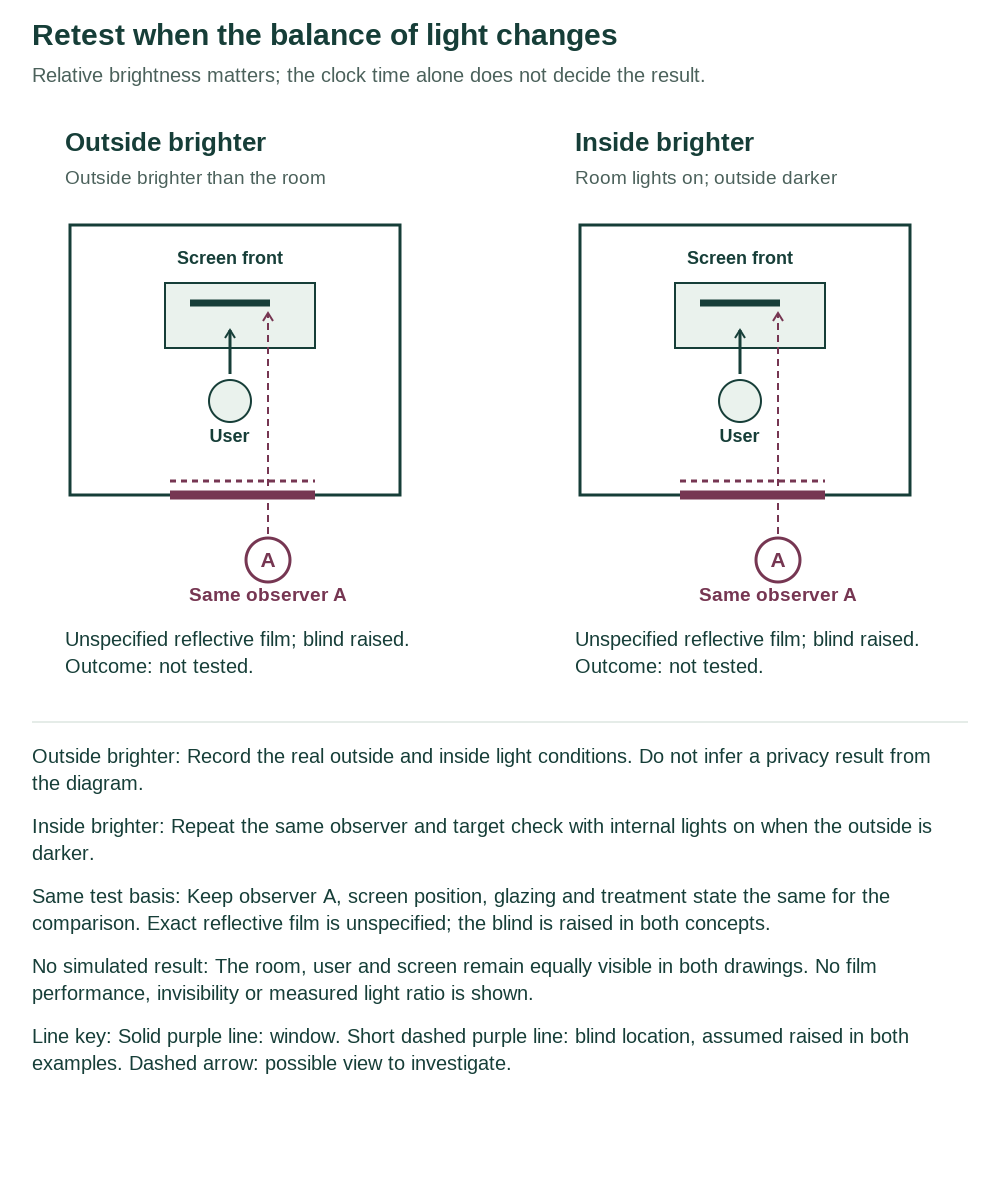
A practical evening requirement may involve an additional covering or a different treatment, but confirm it for the selected system and the target you need to obscure. Frosted or other obscuring treatments also change the outward view; they should not be described as the same thing as clear see-through privacy.
Energy Saving Trust’s hot-weather guidance advises closing coverings when sun falls on the window and opening windows when outside air is cooler, where it is safe to do so. This is general home guidance, not a measured result for a garden office or a reason to block required ventilation.
Check the covering in the positions you will actually use: does it leave the room too dark for the task, introduce reflections, obstruct a handle or make the intended ventilation awkward? Repeat the relevant conditions as seasons change. Leave periods you have not observed on the follow-up list rather than assuming that summer or winter will behave the same.
The lighting guide supplies the separate task and glare observation record. The comfort guide brings together thermal, ventilation and other room-performance questions. A privacy treatment should be considered alongside those requirements.
Keep the exact model, fabric or glass, fitted coverage, operation, fixing, cleaning instructions and warranty conditions in the proposal. Include delivery, installation and making good when comparing costs. Revisit the same sightline record after fitting; retain any untested viewpoint or light condition.
Use the quote comparison method to preserve the same scope, add the complete proposal to the project budget, and carry outstanding checks into the project brief. Return to the office buying guide if a privacy requirement changes the building or window arrangement.
Primary product and guidance pages were checked on 21 November 2026. The original diagrams are unmeasured concepts; the worked record is fictional and no real sightline, film, glazing, fabric, temperature benefit or acoustic result was tested. Manufacturer family and product descriptions are kept distinct from a fitted outcome. Elevated views remain unresolved without suitable evidence. No legal boundary, planning or privacy approval is supplied. Check sightlines at the times you will use the room and ask the supplier which glazing or screening specification their quote covers.