
Check when the sun reaches the desk
Keep a garden room cool
Note when it gets too hot to work comfortably at your desk. At those times, check which windows catch the sun, which openings you can use and what equipment is running. That gives you a starting point for deciding what to change.
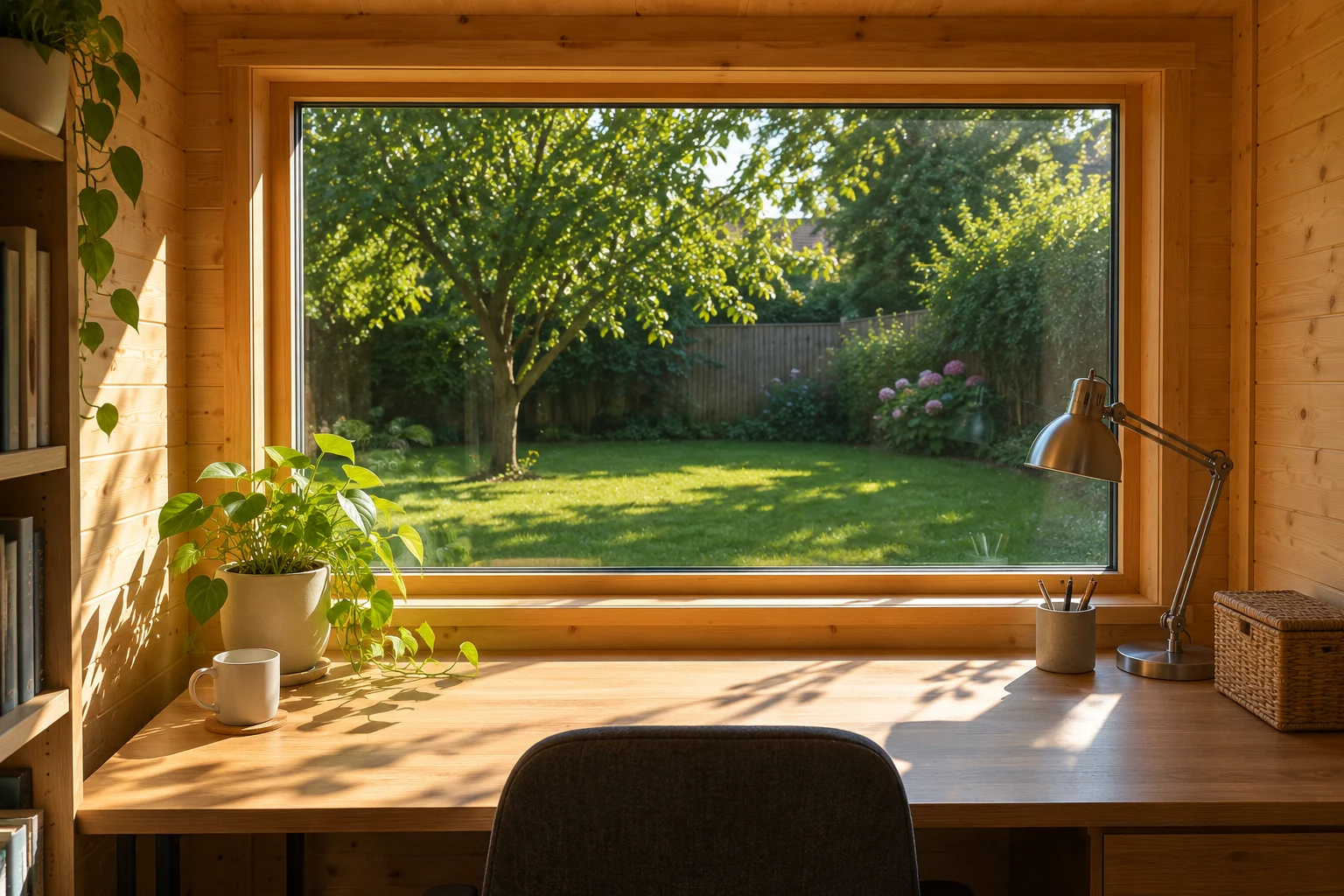
Record when and why the room overheats
Survey the room at different hours
Repeat the observations after one change. Keep the measuring position and working conditions as consistent as practical.
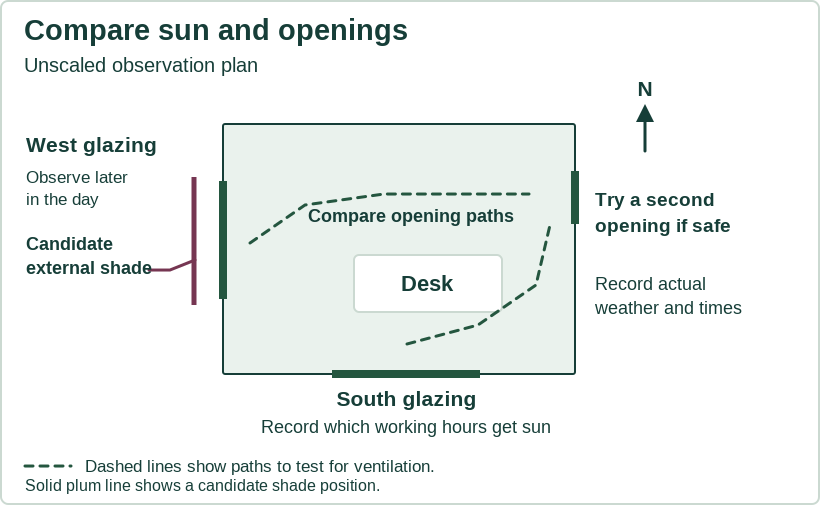
In this sketch north is up, with glazing on the west and south faces. The candidate shade sits outside the west window. Log whether sun reaches that side later in the day, and record the hours and weather for the south glazing. Two optional paths lead from west or south toward a possible east opening. Test actual safe openings when outside is cooler.
Mark north and the glazed sides on the plan. Note when sun falls on each pane and what overhangs, planting and structures shade it. West-facing glazing may bring afternoon or evening exposure as the room and garden warm through the day. Glazing facing south may receive different exposure by time and season. Observe your own room and the hours you work. Record weather, outdoor temperature in a shaded position, indoor temperature and measuring position, openings, glare, occupants and computing equipment. Repeat after a change under as comparable conditions as practical.
Would shade, different glazing or a desk move help?
Check when direct sun reaches the desk and when an external shade would intercept it.
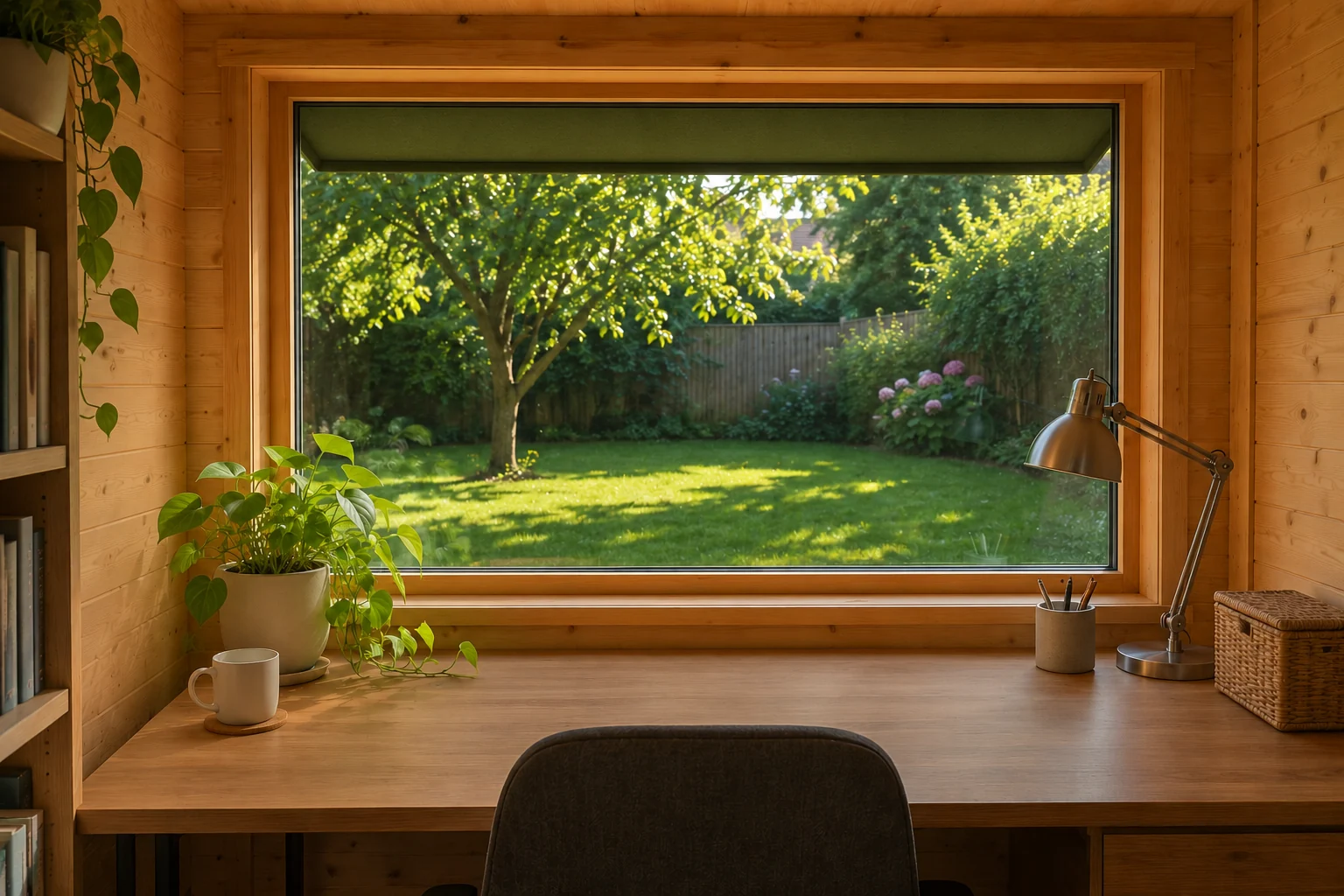
- Direct sun at work time. Mark the panes and assess external shade.
- Warm room when outside is cooler. Compare usable and safe window positions.
- Unresolved heat. Ask what an installed cooling system must do and how it will be serviced.
For south-facing glazing, log the hours when direct sun reaches the working surface, the season and any existing shade from an overhang, trees or nearby buildings. Trial external shade at an affected time and record what is shaded and how the desk feels under comparable conditions. Include winter daylight and safe wind operation in the choice.
If sun through one pane coincides with the hottest working hours, trial external shading before changing the glass. Fixing, wind, safe operation, views and winter light matter. If outside is cooler and opening is safe, open windows to help clear indoor heat. Check noise, security and the available opening path. When comparing replacement glazing, ask for the exact solar gain value (g-value) and visible light transmission for the proposed glass, plus the whole-window thermal and fitting details. A green roof may change heat gain through the roof. The indoor result depends on its existing build-up and heat through the glazing and openings. Check structure, saturated load, drainage and maintenance before committing. UKHSA keep-cool checklist, Pilkington solar-control guide, RHS green roofs
Decide when active cooling needs assessment
Show the designer when the room gets too hot and which shading or ventilation changes are feasible. Ask them to assess the cooling load for the conditions you work in. A fan moves air, and a suitable cooling system removes heat. A cooling unit that recirculates room air still needs a separate fresh-air route. HSE guidance on recirculated air explains this distinction for workplaces. Have any installed system assessed for power, noise, outdoor position, condensate, maintenance and permissions. England’s Approved Document O has a defined new-residential scope. Use the actual building/use and applicable requirements rather than treating it as a universal garden-office rule. Approved Document O
Related guides
Sources and checks
Record the times, locations and room conditions before assessing changes. Public-health advice and England’s new-residential scope have different purposes. Check the sun path and shading on your own site.
- UKHSA keep-cool checklist — England public-health advice on shade, heat and when to open windows safely. Checked 21 November 2026.
- Pilkington solar-control guide — Product-selection explanation of solar and visible-light performance. Checked 21 November 2026.
- RHS green roofs — Requirements for loading, drainage, planting and maintenance. Checked 21 November 2026.
- Approved Document O — Scope of England’s guidance for new residential buildings. Checked 21 November 2026.
- HSE guidance on recirculated and fresh air — Distinguishes recirculating air systems from the outdoor air needed for workplace ventilation. Checked 21 November 2026.