
Tie each charge to the agreement
Garden room deposits and contracts
Before paying a deposit, ask what triggers each payment and what written evidence you’ll receive when it falls due. Write down who will finish anything still outstanding.
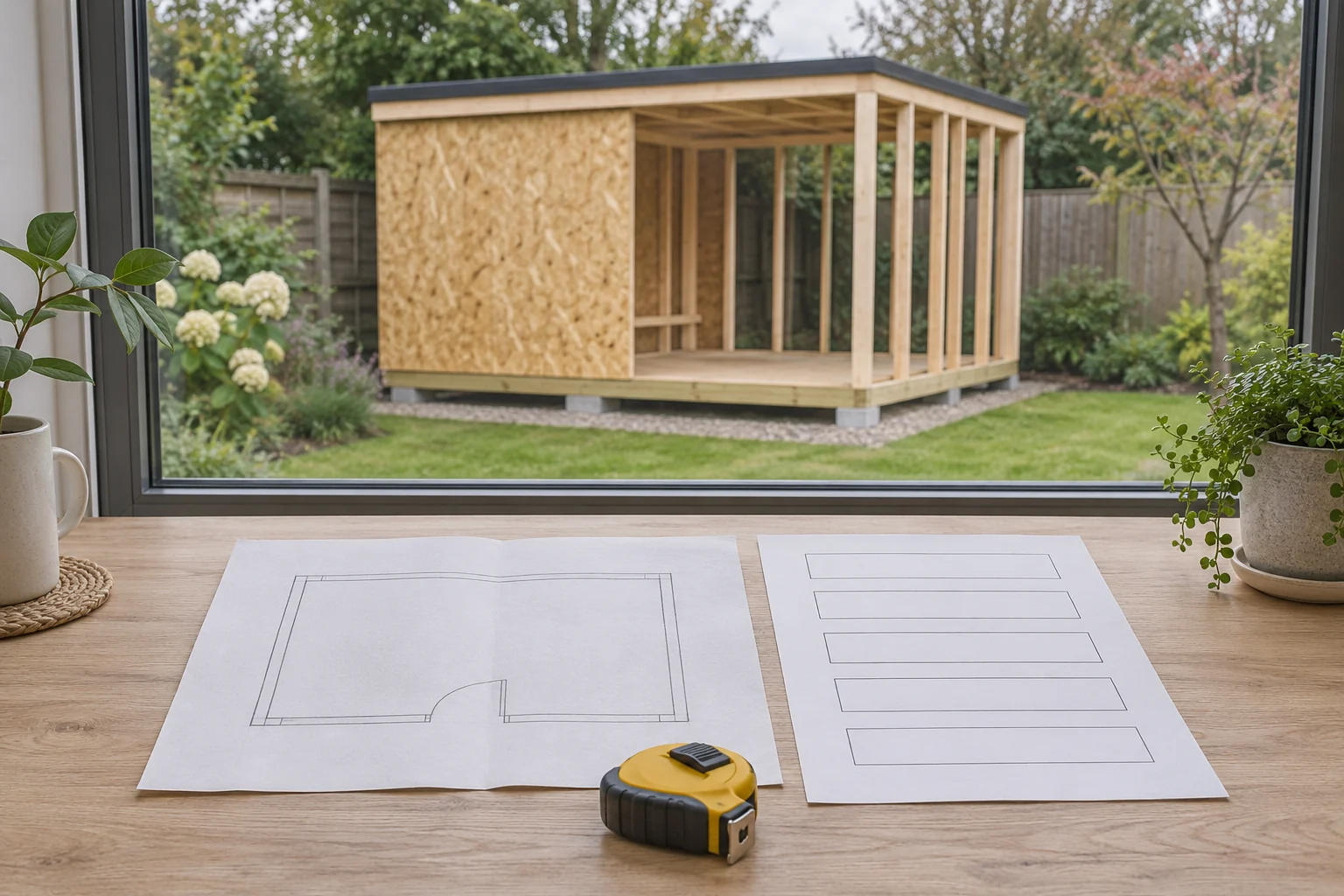
Match payments to milestones
Keep the payment record with the quote
For each payment, note what triggers it, what written evidence you’ll get, what any percentage applies to and whether the supplier credits your reservation payment.
| Milestone | Ask what proves the event | Ask what becomes payable |
|---|---|---|
| Reservation or survey | Named model, postcode, services needing survey, expiry and survey report | Is the sum credited, refundable or charged separately? When do those terms change? |
| Design and order | Approval responsibility, drawing revision, approvals where needed and change cut-off | Which price do percentages use? Which parts are selected and what is still provisional? |
| Manufacture and delivery | Accepted order, production trigger, access, base and delivery date | Who carries delay or failed-delivery cost when assumptions change? |
| Installation and finishes | Definition of assembly, finished room and included services | Which scope, proven milestone or date triggers the charge? |
| Completion | Test records, applicable compliance paperwork, keys and a dated snag record | What is still owed, who owns the defects and how is remaining work recorded? |
| Stage | Amount separately paid | Cumulative paid | Contract balance |
|---|---|---|---|
| Reservation | £250 | £250 | £19,750 |
| 20% milestone, £4,000 in total | £3,750 after the £250 credit | £4,000 | £16,000 |
The fictional contract uses 20% of £20,000. It applies the already-paid £250 to the £4,000 stage total. The example leaves later work and payments in the remaining £16,000. Record the actual contract basis for your project.
Hawksbeck’s published schedule links charges to design, start of build, start of plasterboard fitting and key handover. Oeco’s order process describes a reservation, later deposit, installation balance and subsequent electrical checks. Use the signed agreement to identify how each stage works for your order, including later trades.
Read cancellation and change terms
Take the questions to the contract
For each question, write down the contract document and revision that apply. Name the person who needs to answer before you go ahead.
Read the actual sale and installation contract. Ask it to explain cancellation before and after manufacture, delays, what changes require consent, price variations, failed access and the effect of a refused approval or survey finding. Ask which drawing and quote revision takes priority. A website use policy may govern the website itself and tells you little about your selected build contract. Keep the accepted documents and every approved change.
Under the UK Consumer Contracts Regulations, regulation 6(1)(e) excludes a contract to the extent that it covers building a new building or converting an existing building into a substantially new one. Regulation 28(1)(b) sets a separate exception to the Part 3 cancellation rules for goods made to the consumer’s specification or clearly personalised. Ask how the actual sale and scope are classified before relying on a refund or deadline.
Read the CMA fair-contract guidance on clear terms and cancellation charges. Check any other rights on quality, descriptions and services separately. For the particular contract or clause, use the GOV.UK consumer advice routes for England and Wales, Scotland or Northern Ireland.
Who covers damage during the build?
Ask the contractor what protects people and property during the work and confirm each policy’s scope. Check your own policy before construction and when you start using the detached room for work. Ask for the provider and terms of each separate protection before relying on it.
| Protection | What to confirm | Where to confirm it |
|---|---|---|
| Contractor’s cover | Named business, activities, subcontractor arrangements, dates, limitations and exclusions | Contractor and its insurer or broker |
| Your property and work use | Construction period, detached building, equipment and business visitors | Your home or business insurer |
| Deposit, defects or insolvency | Any separate policy or scheme, issuer, trigger and evidence of protection | Named policy or scheme provider |
| Workmanship guarantee | Provider, duration, coverage, conditions and claim route | Named guarantor and written terms |
See the ABI’s public liability overview and GOV.UK guidance on home business insurance.
Related guides
Sources and checks
The two supplier process pages illustrate different payment triggers. The arithmetic is fictional. The statutory and insurance sources describe their own scope. Ask an adviser or insurer about applying them to the selected contract or policy.
- Hawksbeck costs and payment stages — Published stage triggers for design, construction and key handover. Checked 21 November 2026.
- Oeco order process — Published reservation, deposit, installation balance and later checks. Checked 21 November 2026.
- Consumer Contracts Regulations 2013, regulation 6(1)(e) — General application and the new-build and conversion exclusion. Checked 21 November 2026.
- Consumer Contracts Regulations 2013, regulation 28(1)(b) — Part 3 personalised or precisely specified goods exception. Checked 21 November 2026.
- CMA writing a fair contract — Transparency and cancellation provisions, updated 22 July 2026. Checked 21 November 2026.
- GOV.UK implied and statutory rights — Other rights on products and services. Checked 21 November 2026.
- GOV.UK consumer rights and advice — Current advice routes across the UK. Checked 21 November 2026.
- ABI public liability overview — Business-related third-party injury and property claims and variation in policies. Checked 21 November 2026.
- GOV.UK running a business from home — Insurance questions for work use, equipment and visiting clients. Checked 21 November 2026.