
MAKING SPACE
Give each process the space it needs.
Draw the actual setup with its tools and materials in use, then check how you’ll clean up and put them away.
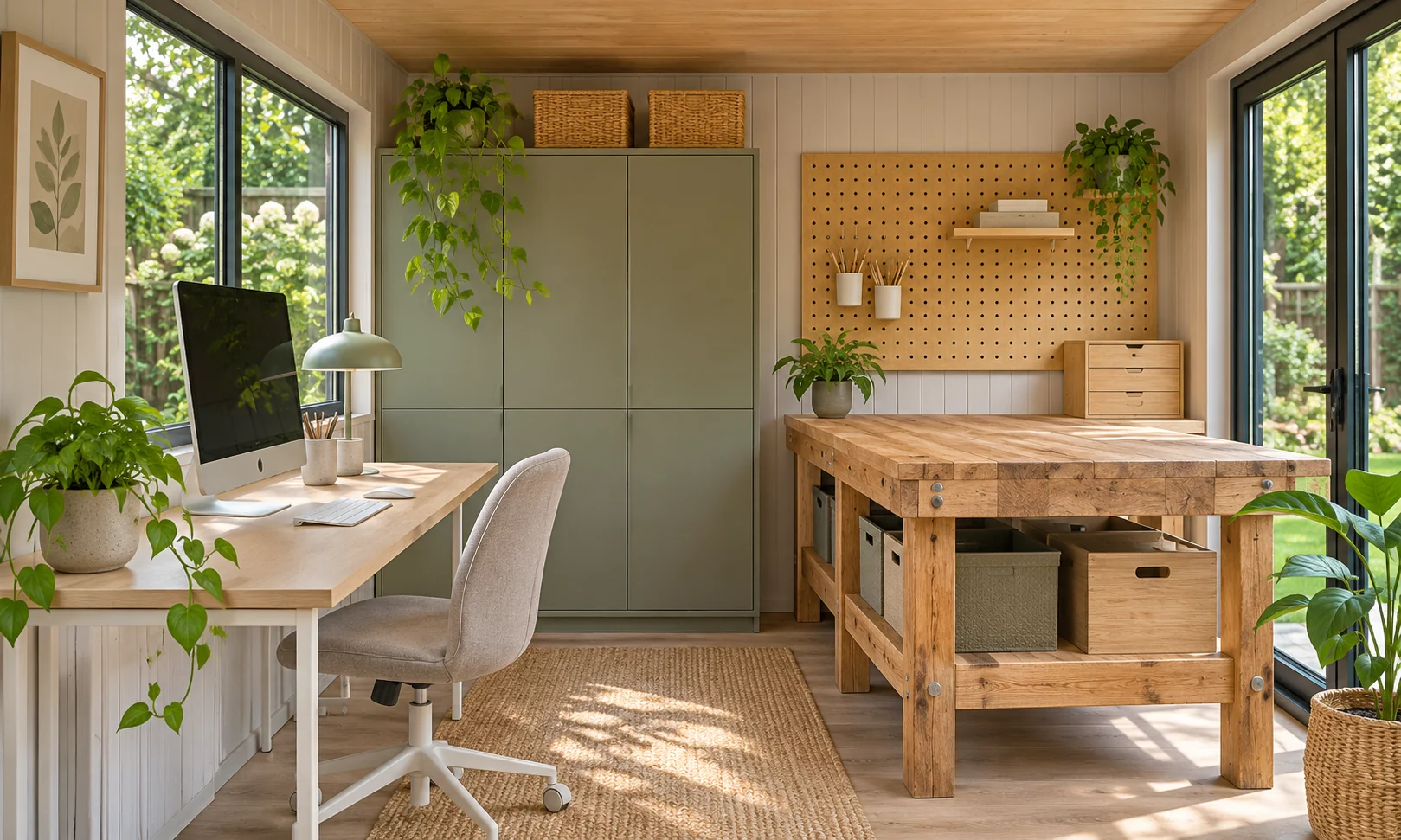
Pottery and kilns
For the covered models, ROHDE’s TE-MCC-Plus-DH manual, English section 8.1 excludes garden sheds as a location. Choose suitable premises before selecting one. Record the exact model and manual version, clearances and humidity conditions, and agree support, heat, ventilation and electrical requirements with the manufacturer and competent specialists.
HSE CR4 for kiln loading and unloading describes occupational silica risks and controls. Agree safe clay handling and cleaning, separate stock, the needed extraction and the responsible professional before use.
Equipment and activity matrix
Name the product, operating position and actual task first. Get specialist advice for heat, dust, fumes, power or wastewater.
Download the equipment and activity worksheet
| Activity | Model and manual revision | Actual dimensions and clearance | Air, heat and power | Moisture, cleaning and waste | Evidence and named assessor |
|---|---|---|---|---|---|
| Pottery or kiln | — | — | — | — | — |
| Painting and cleaning up | — | — | — | — | — |
| Jewellery | — | — | — | — | — |
| Sewing and craft | — | — | — | — | — |
| Photography | — | — | — | — | — |
Painting and jewellery
Before you choose a sink, list what you’ll wash in it and how you’ll dispose of the waste. Winsor & Newton’s oil-paint care and waste advice describes keeping process materials out of unsuitable disposal routes. Confirm liquid waste and washout with the actual sewerage provider and waste adviser. Where trade-effluent consent applies in England or Wales, Ofwat identifies the sewerage undertaker’s role.
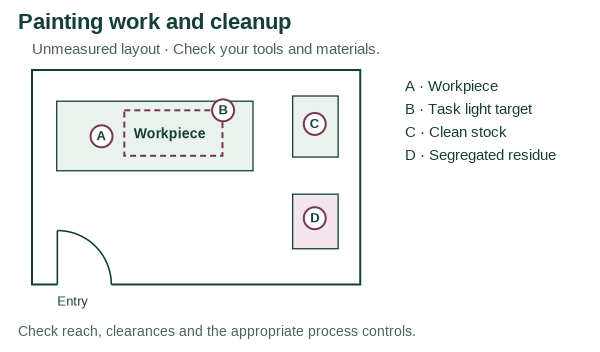
For painting, draw the easel under controllable task light, a stable palette and a separate drying and material-storage area outside the entry path. Read the instructions for the paints and other materials you use. Check ventilation, storage and how to clean up.
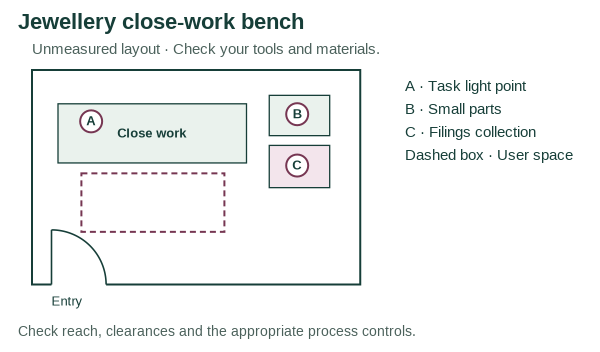
For jewellery, draw a close-work bench, task light, small-parts storage and filings collection. Under HSE exposure-control guidance, identify soldering, polishing and chemical sources individually and have a competent person assess any capture or extraction. General fresh air is a separate provision.
Sewing and craft layouts
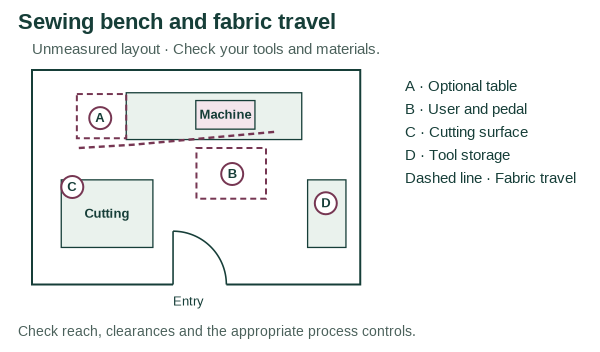
Draw the actual machine, optional table, operator and pedal. Brother’s Innov-is A65 listing identifies an optional extension table. Allow for fabric beyond the machine, alongside cutting, pressing, stored tools, task lighting and a clear route.
For a general craft room, leave an adaptable clear bench area and mark tool cabinets with their doors open. Keep computer work and clean supplies away from benches where you polish parts or handle dusty materials. Test reaching frequently used items without moving your chair into the access route.
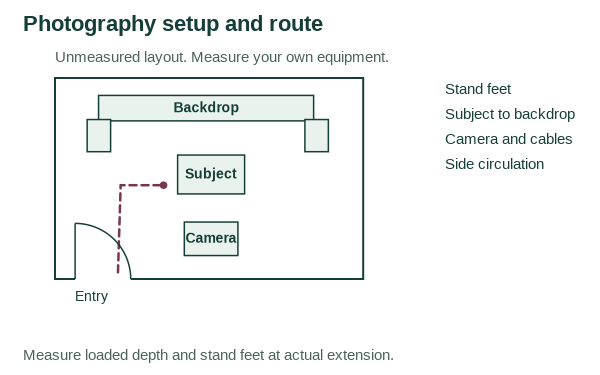
Will the camera, backdrop and stands fit?
Measure background support width and total loaded depth, feet, stand positions and the distance needed between product, background and camera. Draw a path for the subject and cables. Record alternate positions for storage without blocking the exit.
Check daylight crop and whether light needs to be excluded. Allow for moving and putting away stands, power supply, backdrop roll and ventilation when the room is closed. Confirm exact equipment dimensions from the current product documentation.
Related guides
Sources and checks
The layouts show unmeasured clearances. The kiln warning refers to the named ROHDE manual models and the sewing accessories refer to the named Brother machine. Give the studio designer the manual for your exact equipment and a list of the materials you’ll work with.
- ROHDE TE-MCC-Plus-DH kiln operating instructions — ROHDE TE-MCC-Plus-DH kiln operating instructions Checked 21 November 2026.
- HSE CR4: silica during kiln loading and unloading — silica during kiln loading and unloading Checked 21 November 2026.
- HSE: controlling hazardous-substance exposure — controlling hazardous-substance exposure Checked 20 November 2026.
- Winsor & Newton: oil-paint studio safety and disposal — oil-paint studio safety and disposal Checked 20 November 2026.
- Brother UK: Innov-is A65 dimensions — Innov-is A65 dimensions Checked 21 November 2026.
- Manfrotto: LL LA1108 background support — LL LA1108 background support Checked 21 November 2026.
- HSE: physical environment and task lighting — physical environment and task lighting Checked 20 November 2026.
- HSE lighting and human factors — HSE lighting and human factors Checked 20 November 2026.
- Approved Document P 2013 PDF — Approved Document P 2013 PDF Checked 20 November 2026.
- Bristol Water regulations — Bristol Water regulations Checked 20 November 2026.
- Approved Document H 2015 PDF — Approved Document H 2015 PDF Checked 20 November 2026.
- GOV.UK: when permission is required, home working — when permission is required, home working Checked 20 November 2026.
- Ofwat: trade effluent consents and appeals — Role of the sewerage undertaker in trade effluent consent in England and Wales. Checked 21 November 2026.