
Calculate electricity use
Garden office running cost calculator
Use the metered kWh for your billing period and the unit rate on your bill to work out what your office costs to run. Without a reading, estimate from each appliance’s power, the hours it’s on and the share of that time it draws power.
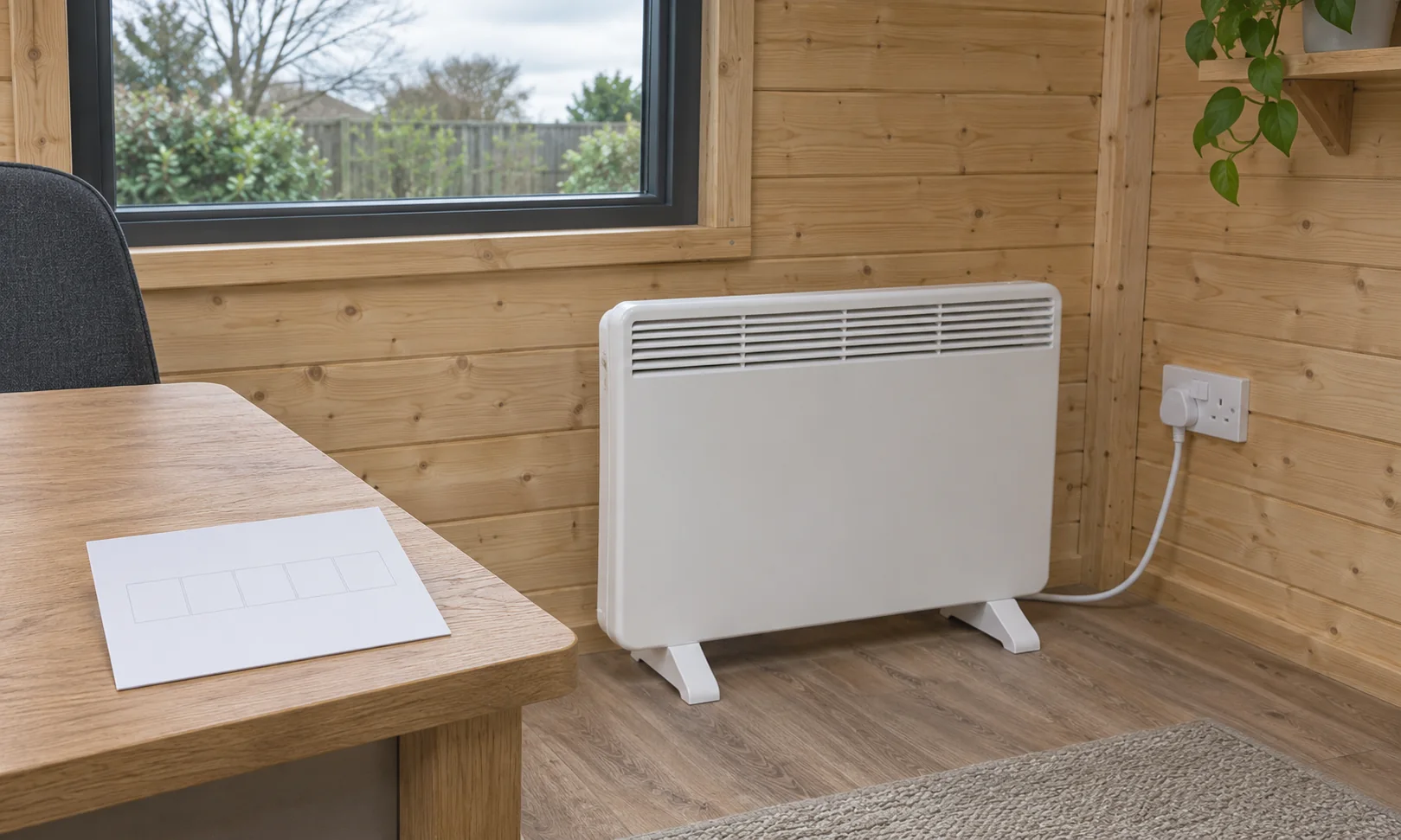
Enter appliance use and your tariff
Before entering electricity use
Use the unit rate including VAT from your bill in pence per kWh. Enter either metered kWh from the period or appliance electrical draw, hours and duty for each line. For a thermostatic heater, enter the hours it was switched on and the share of those hours it drew the stated power. If you leave duty blank, the estimate assumes it drew that power the entire time.
For different unit rates, give each rate its own line with the corresponding non-overlapping usage. Some time-of-use tariffs can have negative rates. Enter the minus sign if it appears on your bill. Use local UK billing dates and actual elapsed hours, including any change when the clocks move. Example of signed tariff rates · UK clock changes. Add a daily charge only if the room increases what you pay for the supply. Use the full billing period for your optional budget. Ofgem tariff information for Great Britain · Utility Regulator for Northern Ireland
Calculate for a billing period
Read the energy and tariff instructions
Running-cost record
‘Measured’ uses your meter readings for the period. ‘Assumed’ uses rated power, hours and the share of that time the appliance draws that power. The record rounds the full cost to the nearest penny and explains any rounding difference between it and the displayed amounts. Budget comparisons use the displayed total. The cost is for the equipment and tariff entered.
Estimate what your heater costs
Compare a heater at different levels of use
For a garden room heating cost estimate, multiply the heater’s electrical input in kW by the hours it is on and by the fraction of that time it draws the stated power. Multiply the resulting kWh by your tariff in pounds per kWh. To compare two heater-use scenarios, recalculate with different duty or run hours for the same period. To compare electricity rates, use the same kWh and change the tariff. Include other office equipment on its own line.
Worked example at an assumed 28p/kWh
- A 1.5 kW heater at full draw for two hours uses 3 kWh and costs £0.84.
- At the same draw for half of those two hours, it uses 1.5 kWh and costs £0.42.
- Metered use of 3 kWh likewise costs £0.84 at that rate.
For a new or unheated room, a heat-loss assessment uses the room’s surface areas, insulation, air exchange and design temperatures to estimate the heating output needed in kW. This tool estimates electricity in kWh for a chosen appliance and use. For a heat pump, enter measured electrical use or a documented electrical input for the conditions. The unit’s rated heat output describes the heat it delivers. Energy Saving Trust on electric heating
What to save with your result
Keep the source date for your tariff and the metered dates or assumed hours and duty. Check each rate band against the bill and count each interval of energy once. An added standing charge appears once per billing day. Comparing a cold week with a mild one is more informative when you keep their dates and usage with the result.
Download the run record to keep the inputs and totals. For room sizing or decisions about the building fabric, start with the garden room heating guide. For more examples, see garden office running costs.
Related guides
Sources and checks
Your browser uses entered billing dates, energy use, appliance draw, hours, duty, tariff and optional budget. The worked rate is illustrative.
- Ofgem electricity unit rates and standing charges — Explains Great Britain unit rates, daily standing charges and differences by tariff, region and payment method. Checked 21 November 2026.
- Utility Regulator price regulation — Explains the separate regulatory arrangements for Northern Ireland electricity. Checked 21 November 2026.
- Energy Saving Trust electric heating — Explains electric heating types, controls and operating cost factors. Checked 21 November 2026.
- UK clock changes — Explains why selected UK calendar days can comprise 23 or 25 elapsed hours. Checked 21 November 2026.
- How a signed unit rate works — Documents that some time-of-use import rates can be negative. The calculator uses the reader’s unit rate. Checked 21 November 2026.